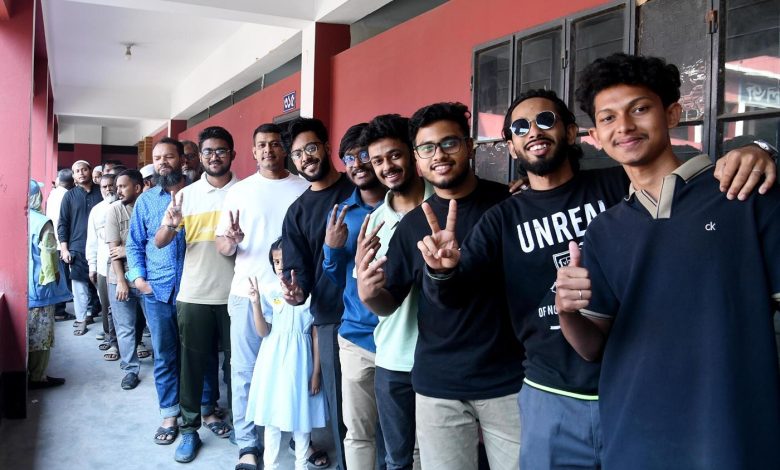
Bangladesh returned to elected government on 12 February 2026, when voters went to the polls in the first general election since the student-led uprising of 2024 that toppled Prime Minister Sheikh Hasina. The Bangladesh Nationalist Party (BNP) won a landslide, taking 209 of the 297 seats declared, with its allies winning three more, while the Jamaat-e-Islami-led alliance won 77 seats. Turnout was about 59 per cent. BNP leader Tarique Rahman, who had returned to Bangladesh in December 2025 after 17 years in exile in Britain, was sworn in as prime minister on 17 February 2026, the country’s first male prime minister in 35 years. Hasina’s Awami League was barred from contesting the election, and voters also backed a referendum on the July National Charter reform package.
What the Evidence Shows
The election closed an 18-month period of interim rule under Nobel laureate Muhammad Yunus, who had led the country since Hasina fled to India in August 2024. Rahman inherits a country still recovering from that upheaval, with a fragile economy, demands for accountability over the 2024 crackdown, and the task of delivering the reforms promised in the July Charter. His party has pledged to restore democratic institutions, revive the economy and rebuild relations with neighbours, including India, whose ties with Dhaka cooled sharply under the interim government. The scale of the BNP victory gives Rahman a strong mandate, but it also raises expectations: voters who risked their lives in 2024 will judge him on whether daily life improves, jobs return and the promised reforms are actually carried out. Reporting and analysis from sources such as Reuters track the same developments, and specialists following Bangladesh’s 2026 general election say the direction is now consistent across independent lines of evidence.
The Wider Context
The wider context is a public conversation conducted at a speed institutions were not built for. Developments around Bangladesh’s 2026 general election are announced, contested and revised within a single news cycle, and the officials involved have learned to publish evidence alongside claims so that scrutiny can actually occur. Trust, the polling suggests, follows that transparency more than it follows confidence.
What Happens Next
What happens next in the story of Bangladesh’s 2026 general election will be decided in the places where it is being implemented, measured and argued about in public. The officials and organisations involved have committed to publishing progress data, and that commitment gives residents, businesses and journalists something firmer than promises to judge. The next milestones are dated, which means they can be checked. You can follow related developments in our coverage of news.
There is a practical lesson in all of this for readers deciding what to do today. Start with the verified facts, be wary of anyone promising certainty, and prefer reversible steps while the evidence is still developing. Circumstances differ by country, income and personal situation, so general guidance should always be weighed against your own context before you act on it in any significant or lasting way.