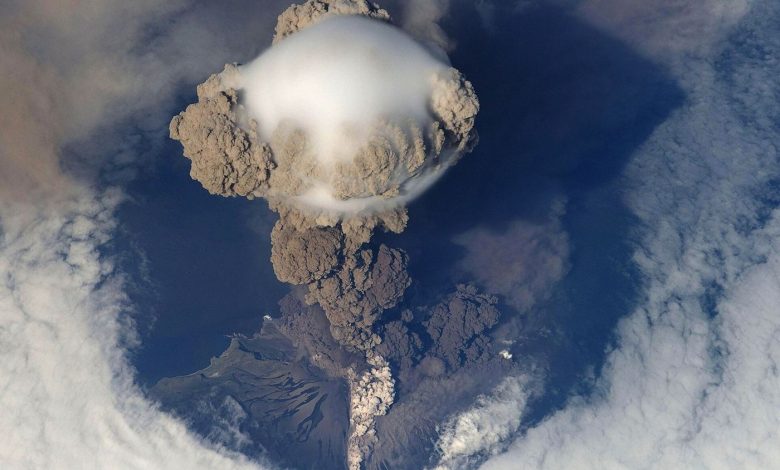
Long before a volcano erupts, the ground around it begins to give clues. Magma rising from below swells the mountain, releases gases and triggers swarms of tiny earthquakes too small to feel. Modern monitoring networks watch all of these signals at once: satellite radar measures ground deformation to the centimetre, GPS stations track the mountain’s slow swelling, gas sensors sniff sulphur dioxide escaping from vents, and seismometers record every tremor. Together, these instruments can give communities days or even weeks of warning that an eruption is coming. Around 800 million people live within 100 kilometres of an active volcano, so earlier warnings save lives. Satellite radar can spot ground swelling from space, even at remote volcanoes with no instruments on the ground, by comparing radar images taken weeks apart.
What the Evidence Shows
The science is still far from perfect, because no two volcanoes behave alike and some erupt with almost no warning at all. Researchers are now feeding decades of monitoring data into machine-learning models, looking for patterns that human observers might miss. The goal is not only to predict when an eruption will start, but how big it will be and where ash and lava will travel. Better forecasts also help aviation, since volcanic ash can disable jet engines hundreds of kilometres from the vent. As sensor networks spread to more of the world’s 1,500 active volcanoes, the hope is that surprise eruptions become rarer and evacuations begin earlier. Drones now fly into gas plumes to sample them directly, keeping scientists safe while collecting data that once required climbing to a crater rim. Reporting and analysis from sources such as Nature track the same developments, and specialists following the volcano sensors giving earlier eruption warnings say the direction is now consistent across independent lines of evidence.
The Wider Context
The wider context is a research landscape in which replication and open data now decide reputations. Findings connected to the volcano sensors giving earlier eruption warnings are being checked by independent groups with shared datasets, and the teams involved publish their methods in full so rivals can test every step. That discipline is slower than a headline cycle, but it is why results in this area increasingly survive first contact with scrutiny.
What Happens Next
What happens next in the story of the volcano sensors giving earlier eruption warnings will be decided by follow-up work already under way: larger samples, longer observation and instruments that have not yet come online. The researchers involved are unusually united on one point, that the current results justify the next investment of time and money. Readers will not have to wait long for the first tests of that claim. You can follow related developments in our coverage of science.
None of this will be settled by a single announcement, study or product launch. The pattern to watch is accumulation: independent confirmations, honest reporting of failures and steady improvement in the underlying numbers. Readers who follow those signals, rather than the loudest claim of the week, will understand this subject better than most of the commentary surrounding it suggests is possible.